
Region / World History
West Asia & North Africa
Explore 12 selected events from West Asia & North Africa across the six reading eras, with dates, complete stories, representative locations and bibliographies.
3500–801 BCE
Early Civilizations
Uruk: Writing Emerges from the Accounting Room
The expansion of cities in southern Mesopotamia gave rise to early writing for recording goods and labor, changing how society was organized.
The Giza Pyramids and the Nile State
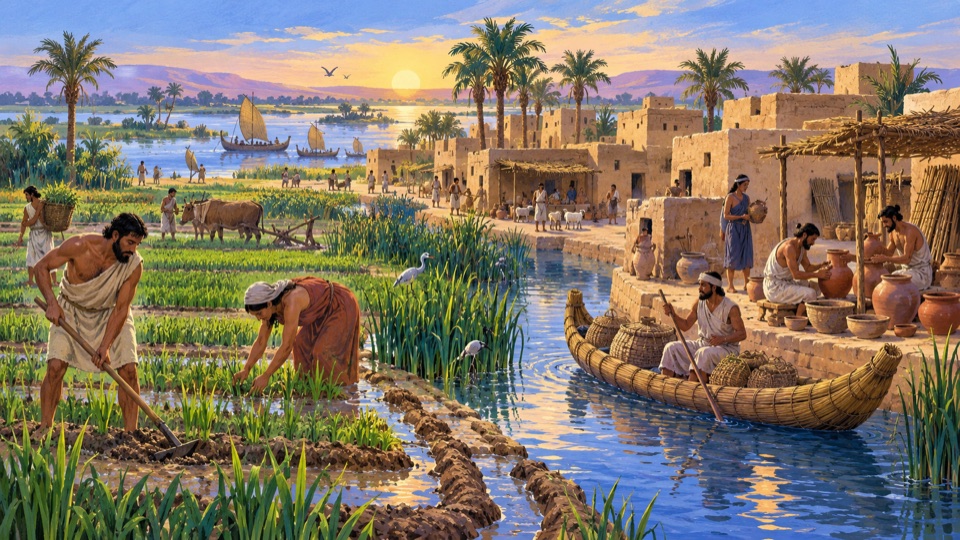
Agriculture and transport along the Nile supported large tomb-building projects, and the pyramids inscribed royal power, religion, and social mobilization in stone.
The Code of Hammurabi and Babylonian Kingship
A Babylonian ruler had disputes over families, property, and work inscribed on a stone stele, asserting royal power through judicial authority and leaving a record of ancient social hierarchies.
The Hittite Capital Hattusha and Bronze Age Diplomacy
Centered on Hattusha, the Hittite kingdom of Anatolia participated in the international networks of Bronze Age West Asia through war, treaties, and written archives.
800 BCE–499 CE
Classical World
500–1399 CE
Interwoven Worlds
The Hijra and the Formation of the Islamic Community
Muhammad and his followers migrated from Mecca to Medina, where a religious community gradually took shape; Islam subsequently spread through West Asia and farther afield.
Translation and the Creation of Knowledge in Baghdad
Scholars in the Abbasid period translated knowledge from several languages into Arabic and continued research in medicine, mathematics, and astronomy.
1400–1749 CE
Global Encounters
1914–2024 CE
Modern World
Israel's Establishment and Palestinians' Memory of Catastrophe
Israel declared its establishment and the war expanded; large numbers of Palestinians were forced from their homes, becoming central to the Palestinian historical memory of the Nakba.
Egypt's July Revolution and the Establishment of the Republic
The Free Officers seized power and forced the king to abdicate; Egypt subsequently abolished the monarchy, opening a new phase of anticolonial action and state reform.
Algerian Independence and the End of Colonial War
Years of war and negotiations led to Algerian independence; decolonization reshaped North Africa while leaving challenges involving migration, violence, and memory.
The Iranian Revolution and the Establishment of the Islamic Republic
Nationwide protests and strikes overthrew the Pahlavi dynasty, and a new government led by Khomeini established the Islamic Republic, changing society and international relations.