
622 CE / West Asia & North Africa
The Hijra and the Formation of the Islamic Community
Muhammad and his followers migrated from Mecca to Medina, where a religious community gradually took shape; Islam subsequently spread through West Asia and farther afield.
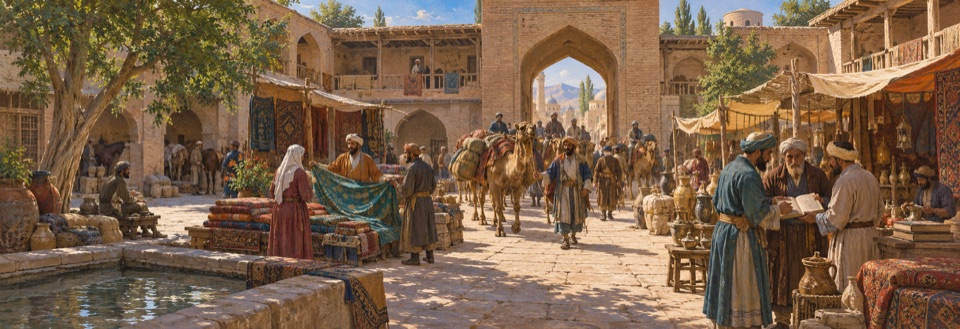
The story
In the early seventh century, Muhammad preached belief in one God in Mecca, coming into conflict with local authority and the social order. In 622, he and his followers migrated to Medina; this Hijra was later chosen as the starting point of the Islamic calendar. The new community combined faith, norms, and political organization, and subsequently expanded its influence in the Arabian Peninsula. After Muhammad died in 632, his successors expanded their rule through war and administration, while trade, scholarship, and migration carried the religion farther. Conquest and the conversion of inhabitants did not occur in step; the acceptance of Islam in different regions often unfolded over several centuries.
Elsewhere in the world
As Islam emerged, Byzantium and Sasanian Persia were engaged in prolonged warfare, and West Asia's existing political and transport arrangements faced new restructuring.
Dates and precision
622 CE Documented date
Positioned by the documented year, month or day; missing months and days are not inferred.
Representative map location
Representative coordinates · 24.467°, 39.611°
Coordinates locate a representative point for the story. They do not mean the event happened only here and do not represent historical borders.
Bibliography
- The Metropolitan Museum of Art | The Birth of Islam
Sources are listed as bibliography titles, without external links. A reference does not mean every sentence or interpretation has been independently verified.