
c. 1760–1830 CE / Europe
Machines, Coal, and Industrialization
Factories, steam power, and coal use gradually expanded in Britain, increasing the scale of production while bringing new problems for labor and the environment.
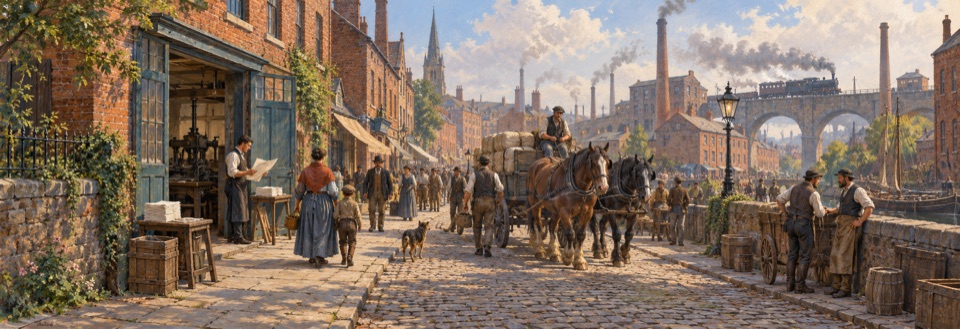
The story
The approximate range 1760–1830 is used here as a frame for observing early British industrialization. Industrialization continued afterward, and other regions had their own processes and periods. In the second half of the eighteenth century, textile, metallurgical, and power technologies in parts of Britain reinforced one another, while factory production and coal use increased. Steam engines were an important element, but industrialization was not an instantaneous turning point caused by a single invention; it also depended on capital, labor, trade, and colonial relationships. Higher productivity came with dangerous work, crowded cities, and pollution; the benefits different classes received and the timing of improvements in their lives varied greatly.
Elsewhere in the world
British industrial production was closely connected with Indian cotton-textile traditions, transatlantic supplies of raw materials, and global markets; industrialization never took place solely inside factories.
Dates and precision
c. 1760–1830 CE Approximate period
The dates describe a process over time; the interactive timeline uses its starting point.
Representative map location
Representative coordinates · 52.486°, -1.89°
Coordinates locate a representative point for the story. They do not mean the event happened only here and do not represent historical borders.
Bibliography
- Science Museum, UK | Steaming Through the Centuries
Sources are listed as bibliography titles, without external links. A reference does not mean every sentence or interpretation has been independently verified.